Yara Keller · 1 November 2026
Soil Core Sampling Exposes Long-Term Effects of Past Agricultural Practices on Modern Heathland Recovery
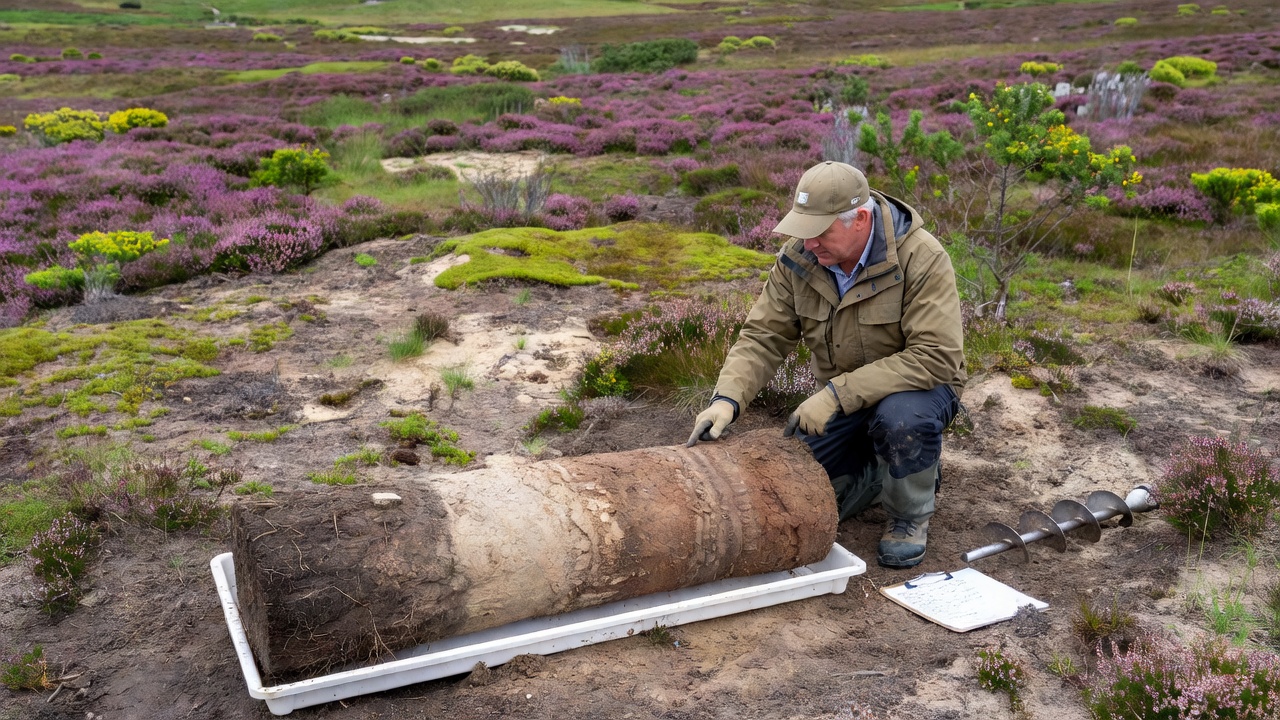
Soil core sampling has become a key method for uncovering how historical farming activities continue to shape heathland ecosystems long after those practices ended, and researchers across multiple regions have documented persistent changes in soil chemistry and biology that slow natural recovery processes. Teams extract cylindrical samples from various depths, then analyze layers for nutrient residues, pH shifts, and microbial communities that reflect decades or even centuries of prior land use such as fertilizer application and livestock grazing.
Historical Agricultural Influences on Heathland Soils
Past agricultural operations often introduced high levels of phosphorus and nitrogen through manure spreading and chemical fertilizers, and these elements remain bound in the upper soil horizons even after decades of abandonment. Core samples from sites in southern England and parts of northern Europe reveal phosphate concentrations that exceed typical heathland thresholds by factors of three to five, which alters plant succession patterns and favors invasive grasses over characteristic heather species. Studies conducted by the United States Geological Survey demonstrate similar nutrient legacies in converted shrublands, where legacy effects from early 20th-century cropping persist in measurable soil strata.
Microbial communities also show lasting alterations, because intensive tillage and liming from earlier eras reduced fungal diversity while boosting bacterial populations adapted to higher nutrient loads. When cores are examined under controlled conditions, these imbalances correlate with slower decomposition rates and reduced mycorrhizal associations that heathland plants normally rely upon for nutrient uptake in nutrient-poor conditions. Observers note that such findings help explain why some restoration projects stall despite seed sowing and grazing management.
Sampling Techniques and Recent Data Collection
Researchers employ manual augers and mechanical drills to retrieve intact cores up to two meters deep, preserving stratigraphic integrity so that chronological patterns of deposition become visible through laboratory assays. In November 2026, collaborative field campaigns across fragmented heath reserves reported new datasets indicating that subsurface compaction from old plow layers continues to restrict root penetration and water infiltration in many locations. These compacted zones, often identified between 20 and 40 centimeters below the surface, trap moisture during wet periods while limiting aeration during drier months.
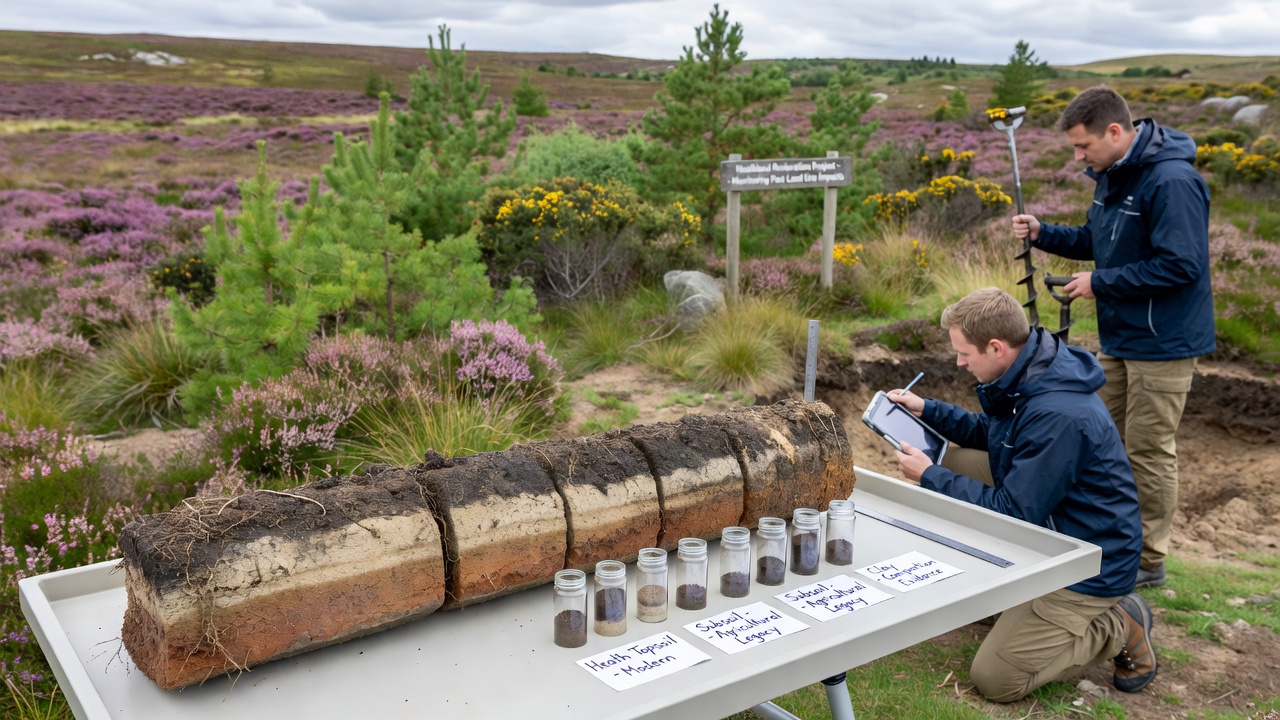
Analytical protocols include sequential extraction methods that differentiate between plant-available and recalcitrant nutrient fractions, and results consistently point to elevated calcium and magnesium residues from historical liming that raise soil pH above the acidic range preferred by ericaceous vegetation. Data from the Commonwealth Scientific and Industrial Research Organisation in Australia further illustrate how analogous legacies appear in heath-like ecosystems converted from pasture, with recovery timelines extending beyond 80 years when soil amendments are absent.
Implications for Current Restoration Strategies
Restoration planners now integrate soil core findings into site assessments before initiating interventions, since standard approaches like topsoil removal or biochar application show variable success depending on the depth and extent of agricultural residues. Where cores indicate deep nutrient enrichment, surface scraping alone proves insufficient and deeper interventions become necessary to expose less affected horizons. Evidence from multiple monitoring networks shows that targeted phosphorus stripping through repeated biomass harvesting can gradually reduce available pools, although full reversion to pre-agricultural conditions remains a multi-decadal process.
Connectivity between surface vegetation and deeper soil layers also emerges as a critical factor, because core profiles frequently reveal abrupt transitions in organic matter content that disrupt hydrological cycles. Those transitions, often remnants of old drainage ditches or fertilizer bands, create patchy recovery patterns across apparently uniform heathland areas. Monitoring programs that combine periodic coring with remote sensing have begun to map these subsurface features at landscape scales, providing managers with more precise targeting for restoration resources.
Conclusion
Long-term soil records preserved in core samples continue to guide understanding of how agricultural history constrains heathland recovery, and ongoing sampling programs supply the empirical basis for adjusting management timelines and techniques. Data accumulated through 2026 highlight both the persistence of past impacts and the measurable progress achievable when interventions address subsurface conditions directly.